“Try writing scripts in pencil”. That was the response director Steven Soderbergh gave to criticism of his new method filmmaking. A style that has earned him both admiration as well as accusations that he is killing the medium.
2018 sees the release of Soderbergh’s latest feature film titled ‘High Flying Bird’, and it is the second feature the director shot entirely on a smartphone with the first being 2017’s ‘Unsane’. In adopting this shooting technique the seasoned director joins the likes of Sean Baker who gained wide acclaim with his breakthrough independent feature ‘Tangerine’, similarly shot using iPhone’s rather than conventional filming equipment.
The film’s story concerns a transgender sex worker who discovers that her boyfriend has committed infidelity, the low concept narrative follows her through a single day. Having completed the script Baker had acquired a budget but quickly concluded that it would not suffice for the planned shooting locations.
Having estimated their expenses and what was required to realise their vision, Baker and cinematographer Radium Cheung began researching alternative shooting techniques and arrived at an iPhone 5S as a means to save money on camera equipment. The money saved on camera expenses was used to pay for shooting locations as well as extras.
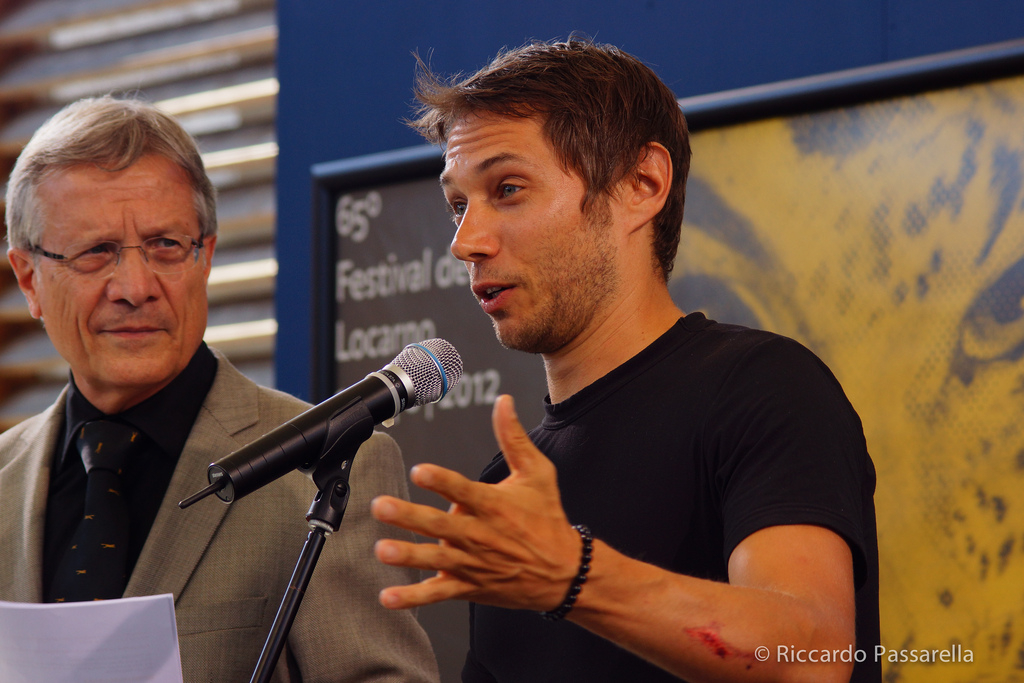
While there were limitations to what a standard iPhone could accomplish, Baker and his crew found methods to extend the capabilities of the device. Various apps were utilised to adjust the focus and frame rate of the phone’s camera, as well as altering the contrast and saturation of the finished image
Outside of budgetary constraints however, the change of equipment also had unexpected benefits that Baker would later elaborate on. He sited the mobility of the device as a help in making the production process smoother and easier to change locations numerous times in a single day, as well as that the phones proved to be less intimidating towards the less experienced performers within the cast.
Baker has maintained that the decisions undertaken to film ‘Tangerine’ in that specific manner were “completely organic”. The director also avoided stressing that aspect of the film’s production until after its premiere at the Sundance Film Festival, having been caught by surprise at the fact that his film was the only one there to be shot entirely on an iPhone.
His next film following ‘Tangerine’ was a similarly intimate drama titled ‘The Florida Project’. The latter was shot almost entirely on 35mm film with one significant exception. The final scene of ‘The Florida Project’ which represents the emotional climax of the film, was shot using an iPhone once again.
Similarly Baker described this decision as a requirement. With most of the film being set and filmed just miles away from Walt Disney Resort, the theme park itself being a major thematic motif for the film. In the climactic scene the characters sneak into the park and to display this action Baker was required to capture footage from inside the location. However Disney themselves did not give expressed permission so to maintain their secrecy while filming Baker and a minimal crew captured the footage with the use of an iPhone 6S. So it is apparent that even with his fondness for more traditional filmmaking methods, Baker firmly realises the potential in phones as a new tool of filmmaking that can be utilised when required.
It was in March 2017, less than 6 months after the release of ‘The Florida Project’ that the discussion of iPhone’s as filmmaking tools began to dominate the discussion again as director Steven Soderbergh released his low budget psychological thriller ‘Unsane’.
Through his career, Soderbergh has fluctuated heavily in terms of how he went about producing his respective films. He made the move to digital cameras in 2002 and would frequently experiment with different forms for each different film. In 2008 he made the complete transition to digital cameras.
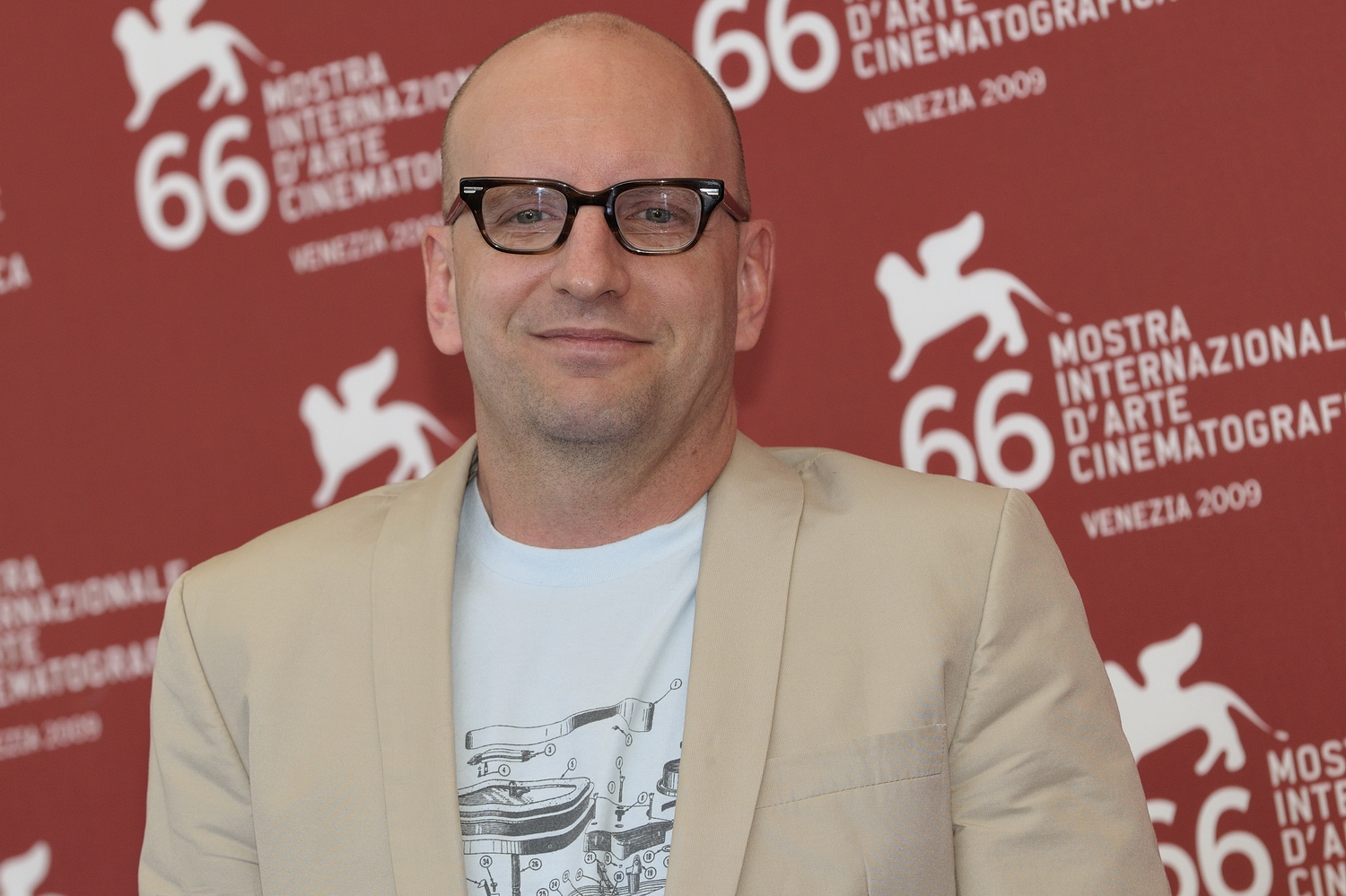
Starting in 2000 he would act as his own cinematographer and camera operator on all of his films, as well as editing all of his own projects from 2002 onwards. He exercised a level of control rarely seen within modern filmmaking, and furthermore did so at a rate that frequently saw him releasing multiple movies per year. However exercising this degree of control rarely coincides with the commercial aspect of cinema, as studios have a reluctance to entrust large budgets to filmmakers who are less assured of delivering a box office success.
This mentality might serve as an explanation for Soderbergh’s next technological milestone. In 2018 he released ‘Unsane’, a relatively low budget project shot entirely on an iPhone 7 Plus. Despite speculation that the decision was prompted by budgetary restrictions Sodebergh himself maintained that it was a strictly creative choice.
No less than a year after the release of ‘Unsane’ Soderbergh released another feature film, similarly shot on an iPhone. A sports drama titled ‘High Flying Bird’, the film was distributed through the streaming platform Netflix.
Unlike Soderbergh’s previous film, ‘High Flying Bird’ spans an array of locations and open spaces, making it a different project. Furthermore its intent to be a grounded drama as opposed to a subjective thriller meant that the surreal imagery the director injected into his previous film would be a poor fit for the subject. In many ways ‘High Flying Bird’ represented a far greater challenge in terms of what the director would need to facilitate with the less complex equipment.
In this case Soderbergh confirmed that this time budgetary restrictions were the motivation behind his shooting technique. He stated “If we’d done High Flying Bird conventionally it would have taken longer and I can’t tell you that it would be better. I could make a couple of arguments that it would be worse.”
Having worked as the director, camera operator, cinematographer and editor on his own films for two decades now, the iPhone allows Soderbergh to perform all of those roles through the device itself. This functionality only makes the use of smartphones more efficient in terms of what Soderbergh wants to achieve with each production. It further realises the goals he has been working towards for his entire career.
It was during a press conference at the Slamdance Film Festival at which ‘High Flying Bird’ premiered that Soderbergh was asked a question submitted by fellow director Christopher Nolan, who asked when Soderbergh would return to shooting on celluloid.
Soderbergh’s answer was simply to retort “When Chris starts writing his scripts in pencils”.
Having opened a world of opportunities to independent filmmakers when he first emerged in 1989, Soderbergh could well be doing the same 30 years later.


